We live in a culture that wears exhaustion like a badge of honor. We treat sleep like an inconvenience—a necessary “pit stop” just so we can get back on the highway of productivity. Maybe you know the feeling: lying in bed, physically drained, yet your mind is still clocked in, replaying the day’s mistakes and calculating tomorrow’s worries.
But what if sleep isn’t a weakness? What if the ability to close your eyes and drift off is actually one of God’s most tender gifts?
The Bible has a surprising amount to say about our pillow time. It presents sleep not just as a biological function, but as a spiritual barometer of our trust. It challenges us to believe that the world will keep spinning without our supervision.
In this deep dive, we will explore God’s theology of rest and how you can reclaim the peace you were designed for. And if you are ready to put this theology into practice tonight, our guide on Bedtime Prayers for Adults offers the practical steps you need to end your day in His presence.
The Theology of the Pillow: Why God Created Sleep
Have you ever wondered why an all-powerful God designed humans to spend roughly one-third of their lives unconscious? He could have made us like machines that run 24/7, but He didn’t. He designed us with a need to stop.
This design is not a flaw; it is a feature. The very act of sleeping is a theological lesson in humility.
The Vulnerability of Sleep
When you sleep, you are completely helpless. You cannot defend yourself, you cannot produce anything, and you cannot control your environment. You are vulnerable. This is terrifying for the human ego, which loves control, but it is essential for the human spirit.
Every night, when you close your eyes, you are physically acting out a spiritual truth: “I am not God.” You are resigning from your position as General Manager of the Universe for eight hours. You are admitting that the world can—and will—go on without your help. This daily surrender prevents us from falling into the trap of thinking we are indispensable. It reminds us that we are created beings, dependent on a Creator who “will neither slumber nor sleep” (Psalm 121:4).
The First “Rest”
We see this pattern established in the very beginning. In Genesis 2, God rested on the seventh day. He wasn’t tired; He is omnipotent. He rested to establish a rhythm of biblical rest for us.
Notice the order: Adam was created on the sixth day, so his very first full day of existence was the Sabbath—a day of rest. This teaches us a profound truth: We don’t just rest from our work; we work from our rest. Peace is the starting line, not just the finish line.
Key Biblical Promises About Sleep (Your Anchors)
Theology is good, but when you are staring at the ceiling at 2:00 AM, you need promises. You need anchors to hold onto when the waves of anxiety try to toss you. The Bible is filled with specific assurances about resting in God’s promises at night.
The Gift to the Beloved
Psalm 127:2 is perhaps the most direct scripture regarding the battle between work and sleep: “It is in vain that you rise up early and go late to rest, eating the bread of anxious toil; for he gives to his beloved sleep.”
The “bread of anxious toil”—doesn’t that perfectly describe modern life? We chew on our worries, thinking that if we just stress enough, we can solve the problem. But God says this striving is “vain” (useless). The verse concludes with a beautiful promise: God gives sleep. It isn’t a prize you earn by emptying your inbox; it is a gift you receive because you are His beloved. You can stop striving now. The Giver is here.
The Safety of the Shepherd
King David wrote Psalm 4:8 while he was in distress, likely being hunted by enemies: “In peace I will both lie down and sleep; for you alone, O Lord, make me dwell in safety.”
Notice the connection between “peace” and “safety.” David slept well not because his life was safe, but because his God was safe. Scriptures on peace like this remind us that true rest doesn’t come from a security system or a padded savings account. It comes from the knowledge that God alone sustains us.
The Promise of Sweet Sleep
Proverbs 3:24 offers a gentle reassurance: “When you lie down, you will not be afraid; when you lie down, your sleep will be sweet.”
This is God’s heart for you. He doesn’t just want you to be unconscious; He wants your sleep to be “sweet”—restorative, untroubled, and refreshing. If you are battling spiritual insomnia or fear of the dark, claim this verse. Speak it out loud. It is a promise that fear does not have permission to enter your rest.
Jesus and Sleep: The Ultimate Example of Peace
If we want to understand what it looks like to truly trust God at night, we have to look at Jesus. Specifically, we need to look at one of the most famous naps in history: Jesus sleeping in the boat during a furious squall (Mark 4).
Picture the scene. The disciples—seasoned fishermen—were terrified. The waves were breaking over the boat, the wind was howling, and the water was rising. And where was Jesus? He was in the stern, sleeping on a cushion.
Why was He sleeping? Was He unaware of the danger? No. He slept because He knew something the disciples didn’t: He knew who was in charge of the water.
Peace is Not the Absence of a Storm This story teaches us a critical lesson about biblical rest: Peace is not the absence of noise; it is the presence of trust. Jesus didn’t wait for the sea to be calm before He closed His eyes. He rested in the middle of the chaos.
You might feel like you are in a storm right now. Maybe the waves of financial stress, family conflict, or health issues are crashing over the sides of your life. You think, “I can’t sleep until this problem is fixed.” But Jesus invites you to a deeper kind of faith. He invites you to sleep while the storm is still raging, not because the problem is gone, but because the Captain is on board.
Action Tip: The “Cushion” Visualization Tonight, if your mind is racing about a specific problem, visualize yourself in that boat. See the storm. Then, look to the stern and see Jesus sleeping peacefully. Imagine lying down next to Him. Whisper, “If You aren’t panicked, I won’t be panicked either.”
When Sleep Escapes You: A Biblical Perspective on Insomnia
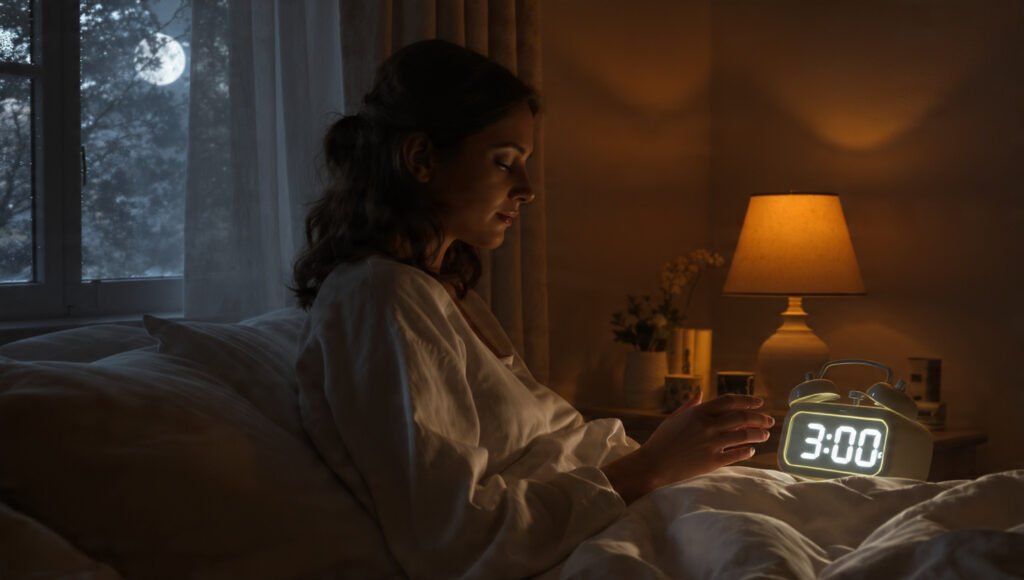
Sometimes, despite our best prayers, sleep simply doesn’t come. You stare at the clock. 1:00 AM. 2:00 AM. The silence feels heavy.
In these moments, it is easy to feel abandoned or broken. But the Bible offers a different perspective on wakefulness. It reframes the “insomnia” as a “Night Watch.”
The Invitation of the Night In the Old Testament, the “night watch” was a specific shift for guards, but it was also a spiritual term. David wrote, “I remember you upon my bed, and meditate on you in the watches of the night” (Psalm 63:6).
Sometimes, God allows us to be awake because the night is the only time He can get our undivided attention. Samuel heard the voice of God when he was lying down to sleep (1 Samuel 3). If you find yourself wide awake, try shifting your perspective. Instead of fighting for sleep, ask, “Lord, is there something You want to say? Or someone You want me to pray for?”
David’s Honest Wrestling You are in good company if you struggle here. David, a man after God’s own heart, was honest about his sleepless nights. He said, “I am weary with my moaning; every night I flood my bed with tears” (Psalm 6:6).
God didn’t rebuke David for his sleeplessness. He met him in it. If you are awake tonight, you don’t need to perform. You can just weep, pray, or simply be with Him.
Bedtime Prayer for the Wakeful Watch: “Lord, the world is asleep, but I am awake. If this is a spiritual alert, show me who needs prayer. If this is just my anxious mind, calm me with Your presence. I stop fighting for sleep and start resting in You. Speak, Lord, Your servant is listening. Amen.”
Practical Ways to “Sleep in Peace” Tonight
Theology must eventually become practice. How do we take these truths and move them from our heads to our pillows? We need a routine that helps us physically and spiritually “power down.”
The “Cast Your Cares” Routine (1 Peter 5:7) The Apostle Peter instructs us to “cast all your anxieties on him.” The word “cast” here means to throw—like throwing a blanket over a horse. It is an intentional, physical transfer of weight. You cannot carry the burden and rest at the same time. You have to put it down.
Meditating on the Word Instead of counting sheep, try counting promises. Using scripture on peace as a lullaby is a powerful way to override the brain’s “fight or flight” response. Repetitive prayer (like the Jesus Prayer: “Lord Jesus Christ, Son of God, have mercy on me”) can physically lower your heart rate.
3 Prayers for Peaceful Sleep Here are three short prayers you can use tonight, depending on what your heart needs:
1. A Prayer of Release (For Control) “Father, I release the world. I release the work left undone. I release the people I cannot change. I release the outcome of tomorrow. I am not the General Manager of the Universe; You are. I clock out now. Hold it all together while I sleep. Amen.”
2. A Prayer of Trust (For Anxiety) “Jesus, the storm is loud, but You are here. I choose to look at You instead of the waves. You give Your beloved sleep, and I am Your beloved. I claim that gift now. Guard my heart and mind in Christ Jesus. Amen.”
3. A Prayer of Thanksgiving (For a Heavy Heart) “God, before I close my eyes, I want to find the good. Thank You for the roof over my head. Thank You for breath in my lungs. Thank You that Your mercies are new every morning. I rest in Your goodness. Amen.”
Action Tip: The Bedside Notebook Keep a small notebook by your bed. If a worry pops up (“I forgot to email Susan”), write it down. Tell yourself, “It is written. I don’t have to hold it in my brain anymore.” This simple act can break the loop of mental rehearsing.