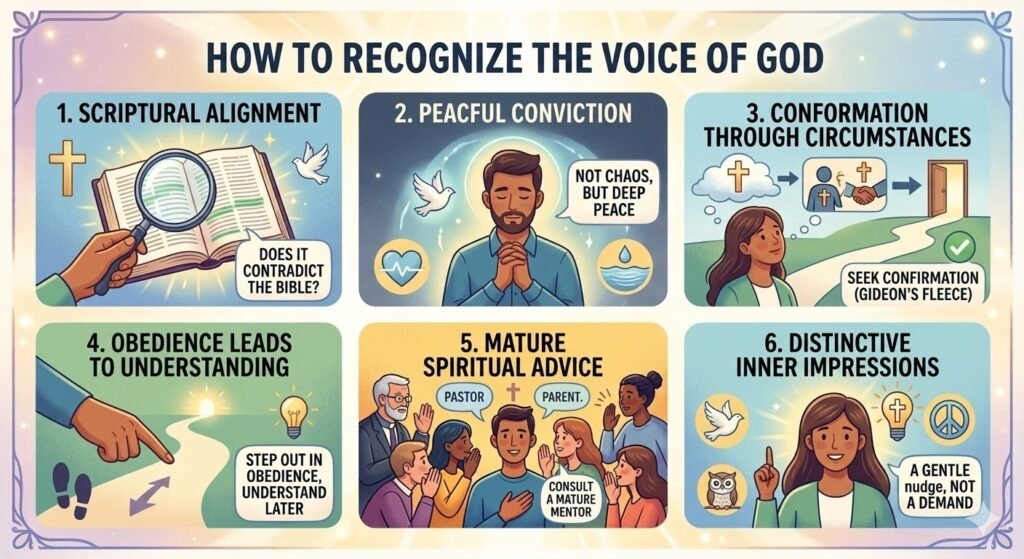
You’ve sensed something stirring in your heart—a nudge, an impression, a quiet knowing. But then doubt creeps in: Is this really God speaking? Or is it just my own wishful thinking? The fear of getting it wrong can paralyze you, leaving you uncertain whether to move forward or second-guess yourself.
The frustration is understandable. Learning how to recognize the voice of God requires more than hope; it requires discernment. And discernment is a skill developed over time through practice, Scripture study, and spiritual attentiveness. The good news? God is far more eager to speak to you than you are to hear from Him. He’s not hiding His voice. You simply need to know what to listen for.
God does not always speak through extraordinary signs or loud revelations. Often He communicates through the still small voice of God, guiding believers through peace, conviction, and scripture.
When you understand the characteristics of God’s voice, you’ll find it becomes increasingly distinct from the noise of your own thoughts, culture’s voices, and dark spiritual deception. This article will help you develop that crucial skill.
Learning to recognize God’s voice is a journey of both the heart and the mind. It’s less about hearing an audible sound and more about developing a “spiritual ear” that can distinguish His frequency from the noise of the world.
Frequently Asked Questions: Hearing God’s Voice
How can we learn to recognize God’s voice?
Recognition comes through familiarity. Just as you know a close friend’s voice on the phone before they identify themselves, you recognize God by spending time in His Word.
- The Litmus Test: God’s voice will always align with the Bible. It is consistent, peaceful, and authoritative.
- The Character: His voice typically carries the “fruit of the Spirit”—love, joy, peace, and patience—rather than anxiety, confusion, or condemnation.
What blocks you from hearing God’s voice?
Often, the “static” in our lives drowns out His “still, small voice.” Common blocks include:
- Internal Noise: Unconfessed sin, bitterness, or a busy mind that refuses to be still.
- Preconceived Notions: Approaching God with a “fixed” agenda, only wanting Him to say “yes” to what you’ve already decided.
- Digital Distraction: Constant consumption of media leaves no room for the silence required for spiritual reflection.
What are the four ways to hear God’s voice?
While God is not limited to these, He historically speaks through:
- Scripture: This is His primary and most objective way of speaking.
- The Holy Spirit: An inner witness or “prompting” that provides peace or a gentle “check” in your spirit.
- Godly Counsel: Wise, mature believers who can provide perspective and confirmation.
- Circumstances: “Open and closed doors” that align with prayer and biblical wisdom.
How to discern God’s voice in Bible verses?
Discerning His voice in Scripture requires more than just reading; it requires meditation.
- Context is King: Don’t “lucky dip” a verse. Ensure your interpretation fits the chapter and the overall character of God.
- The “Leaping” Verse: Sometimes a specific verse will seem to “jump off the page” or burn in your heart (the Rhema word).
- Consistency: If a verse seems to contradict the command to love God and your neighbor, you may be misinterpreting the “voice” behind it.
Pro Tip: If you feel you’ve heard from God, ask for confirmation. God is patient and often uses a combination of the four ways mentioned above to give you confidence in His direction.
What Makes God’s Voice Distinctive?
God’s voice carries unmistakable characteristics that set it apart from other voices competing for your attention. Understanding these qualities is foundational to how to hear God’s voice with confidence.
God’s Voice Creates Peace, Not Panic
One of the clearest markers of God’s communication is peace. When God speaks, even if He’s calling you toward something challenging, His voice comes with an underlying sense of rightness and settledness.
Paul wrote, “Let the peace of Christ rule in your hearts, to which indeed you were called in one body. And be thankful” (Colossians 3:15, ESV). The word “rule” here means to umpire or judge. God’s peace acts as an umpire in your decision-making, settling what’s truly from Him and what isn’t.
By contrast, your own anxious thoughts typically come with agitation, pressure, and a nagging sense of wrongness. If you’re sensing panic, dread, or intense pressure to decide immediately, that’s likely not God’s voice. God doesn’t rush His children into decisions through fear.
God’s Voice Aligns with Scripture
This is non-negotiable: God will never speak anything that contradicts His written Word. The Bible is God’s eternal, unchanging revelation. Any supposed word from God that asks you to act unethically, abandon biblical truth, or compromise righteousness isn’t from God.
When testing whether God is speaking, always ask: Does this align with Scripture? Does it reflect God’s character as revealed in Christ? Would Jesus affirm this direction?
God’s Voice Invites You Toward Love and Righteousness
The fruit of the Holy Spirit is “love, joy, peace, patience, kindness, goodness, faithfulness, gentleness and self-control” (Galatians 5:22-23, NIV). God’s voice always invites you toward these qualities. It calls you toward greater love for God and others, deeper faith, increased humility, and expanded righteousness.
Any message that invites you toward selfishness, bitterness, unforgiveness, spiritual pride, or harm isn’t from God. The character of the message reveals its source.
God’s Voice Produces Clarity, Not Confusion
Your own thoughts often contradict themselves. One moment you think one thing; the next, you think something completely different. But God’s thoughts are unified and clear. When God speaks, confusion typically lifts. Fog clears. What was tangled becomes straightforward.
Many believers struggle to know whether a thought comes from God or from their own mind. Learning how to discern God’s voice vs your own thoughts can help you test what you hear through scripture and the guidance of the Holy Spirit.
This doesn’t mean you’ll have every detail worked out immediately. But the core direction—the essential “yes” or “no,” the fundamental calling—becomes increasingly clear as you seek God’s face and surrender your will to His.
Biblical Examples of Recognizing God’s Voice
Scripture provides rich examples of people learning to distinguish God’s voice. Their stories teach us what to listen for.
Samuel Learning to Recognize God’s Call
In 1 Samuel 3, young Samuel is learning to distinguish God’s voice from the voice of Eli, his mentor. Samuel hears someone calling his name in the night and repeatedly runs to Eli, thinking it’s him. But Eli recognizes what’s happening: “It is the Lord” (1 Samuel 3:9, ESV).
Notice several things here. First, God’s voice was personal—it called Samuel by name. Second, it was clear enough to distinguish from other voices. Third, it required guidance from a mature believer to fully recognize. Fourth, once Samuel understood the source, he could respond: “Speak, for your servant is listening.”
Your journey toward recognizing God’s voice may similarly require the help of mature believers. Don’t hesitate to ask for guidance and confirmation from those with spiritual maturity.
Peter’s Vision on the Rooftop
In Acts 10, Peter is praying on a rooftop when he receives a vision. At first, he’s confused about what God is communicating. But then Cornelius’s servants arrive, the Spirit speaks to him, and Peter suddenly understands: God is calling him to bring the gospel to Gentiles.
What’s instructive here? Peter’s recognition of God’s voice required multiple confirmations—the vision itself, the Spirit’s direct word, the arrival of Gentile servants, and a shift in his understanding. God often speaks through layers of confirmation rather than a single moment of clarity.
How to Test Whether God Is Speaking
Beyond recognizing the general characteristics of God’s voice, you need a practical framework for testing specific impressions or words you sense from God. Here’s a proven approach.
The Four-Question Test
When you sense God might be speaking, ask yourself:
1. Does this align with Scripture? Search the Bible for relevant passages. If God is speaking, it will harmonize with His revealed truth. Spend time in prayer asking the Spirit to illuminate relevant scriptures.
2. Does this produce genuine peace when I surrender to it? When you genuinely let go of your preferences and accept God’s direction, do you feel settled? Peace isn’t the absence of challenge; it’s a sense of rightness even in difficulty. If you feel agitated after supposedly hearing from God, that’s a red flag.
3. Does this invite me toward righteousness, love, and deeper faith? Would acting on this make you more like Jesus? Would it increase your love for God and others? Would it require greater faith and obedience? God’s voice always moves you toward spiritual growth.
4. Have I sensed this confirmed in multiple ways? God often confirms His direction through various channels—Scripture, prayer, circumstances, wise counsel, inner peace, spiritual prompting. When multiple confirmations point the same direction, you can move forward with confidence.
If you can answer “yes” to all four questions, you likely have heard from God.
Seek Confirmation from Mature Believers
Don’t make major decisions based solely on your own discernment. Proverbs 11:14 reminds us, “Where there is no guidance, a people falls, but in an abundance of counselors there is safety” (ESV).
Share what you sense God is saying with a pastor, spiritual director, or mature Christian mentor. Their perspective, grounded in Scripture and spiritual experience, provides crucial protection against self-deception.
Common Obstacles to Recognizing God’s Voice
Several factors can make it difficult to distinguish God’s voice. Understanding these obstacles helps you overcome them.
Spiritual Immaturity
Like physical hearing develops over time, spiritual hearing develops through practice. The writer of Hebrews speaks of believers who have “trained themselves to distinguish good from evil” (Hebrews 5:14, ESV). The word “trained” implies practice and experience.
If you’re new to listening for God’s voice, don’t expect instant mastery. Give yourself grace as you learn. Over time, your spiritual ears will become increasingly attuned.
Unconfessed Sin
Sin creates distance between you and God. It muffles His voice. If you’re harboring known sin—unforgiveness, dishonesty, pride, lust—you’ll struggle to hear clearly from God. The first step toward clearer discernment is confession and repentance.
Distraction and Noise
God’s voice is often a still, small voice (1 Kings 19:12). In our loud, distracted culture, that quiet voice is easily drowned out. Create space. Turn off your phone. Sit in silence. Walk in nature. In stillness, you’ll hear more clearly.
Seeking God’s Guidance Without Seeking God Himself
When your primary aim is extracting an answer from God rather than deepening your relationship with Him, you’ll miss His voice. Prioritize intimacy with God. Guidance flows naturally from relationship.
Developing Your Personal Spiritual Language

Over time, you’ll discover that God has a particular way of speaking to you personally. Some people recognize God most clearly through Scripture. Others through inner impressions. Still others through nature, worship, or circumstances.
Pay attention to your own spiritual history. When has God spoken most clearly to you? What patterns do you notice? As you recognize your personal spiritual language, discerning God’s voice becomes increasingly natural.
Final Thoughts
Learning to recognize the voice of God is one of the greatest privileges and pursuits of the Christian life. It transforms your faith from static to dynamic, from uncertain to confident, from self-directed to divinely guided.
Many Christians wonder if what they feel in prayer is truly God speaking. Learning how to recognize the voice of God can help you distinguish His guidance from your own thoughts.
God’s voice is more reliable than your instincts, wiser than your reasoning, and more loving than your desires. As you develop skill in recognizing it—through study of Scripture, time in prayer, advice from mature believers, and sensitivity to the Holy Spirit—you’ll increasingly experience the reality Jesus promised: “My sheep hear my voice.”
The God who speaks is speaking. Will you develop the discernment to hear?