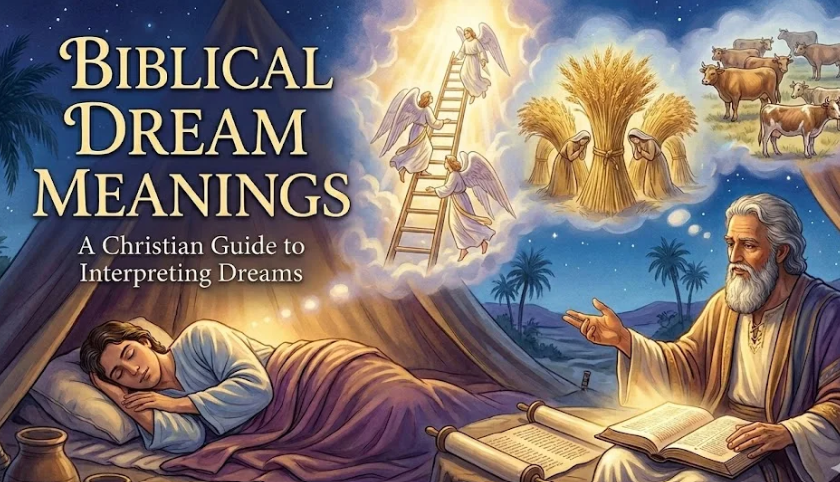
Dreams have fascinated humanity since the earliest pages of Scripture. From Joseph’s visions in Genesis to Daniel’s prophetic encounters in Babylon, the Bible consistently presents dreams as a medium through which God communicates with His people. While not every dream carries divine significance, the biblical record makes clear that God is sovereign even over the sleeping mind — and that biblical dream interpretation is a discipline grounded in Scripture, not human speculation or mystical intuition.
The foundation of biblical dream interpretation rests on one essential truth: God is the sole and supreme interpreter of dreams. This principle is stated plainly by Joseph in Genesis 40:8 — “Do not interpretations belong to God?” Daniel echoes this conviction in Daniel 2:28, declaring that it is God in heaven who reveals mysteries. Any serious approach to understanding dreams must begin and end with this theological anchor, rejecting the counterfeit systems of divination and occult dream analysis that Scripture repeatedly condemns.
Throughout the Old and New Testaments, God used dreams to reveal His plans, issue warnings, confirm covenants, and direct the paths of His servants. Jacob received covenant promises through a dream. Pharaoh was warned of coming famine through symbolic visions that only a Spirit-filled man could decode. The magi were redirected by a dream to protect the infant Christ. These accounts establish that biblical dream interpretation operates within the framework of God’s redemptive purposes — always purposeful, always consistent with His revealed Word.
It is critical to distinguish, however, between dreams that carry divine meaning and those that do not. Ecclesiastes 5:3 notes that dreams can arise from the busyness of daily life — the natural activity of the mind at rest. The prophet Jeremiah issued stern warnings against false prophets who used fabricated dreams to lead Israel astray (Jeremiah 23:25–28). Sound biblical dream interpretation, therefore, applies discernment: testing every impression against the authority of Scripture, the counsel of spiritually mature believers, and the confirmation of the Holy Spirit.
For the modern believer seeking to understand their dreams through a biblical lens, the approach must remain theological and measured. God’s primary and sufficient revelation is found in His written Word — the Bible. Dreams, when they do carry meaning, will never contradict Scripture, introduce new doctrine, or bypass the ordinary means of grace. Approached with humility, prayer, and scriptural grounding, biblical dream interpretation becomes not a mystical exercise, but a sober act of seeking the face of God — listening carefully, testing diligently, and submitting fully to His sovereign voice.
Throughout the Bible, dreams are sometimes used by God to reveal guidance, warnings, and prophetic insight. In the Old Testament, Joseph interpreted dreams that shaped nations (Genesis 37–41), and Daniel discerned divine messages through visions (Daniel 2). In the New Testament, Joseph received instruction through dreams concerning the protection of Jesus (Matthew 1–2).
However, Scripture also teaches that not every dream carries spiritual meaning (Ecclesiastes 5:3). Biblical dream interpretation requires discernment, context, and alignment with God’s Word—not modern symbolism or superstition. Symbols in dreams must be tested carefully and compared with Scripture (1 John 4:1).
Below you’ll find common biblical dream symbols organized by category, along with scriptural insight to help guide interpretation.
Animals in Dream (Biblical Meaning)
Animals in Scripture often represent spiritual conditions, authority, danger, purity, or character traits. Context determines whether the symbol is positive or negative. For example, lions may symbolize strength or spiritual attack (1 Peter 5:8), while sheep represent believers.
In the Bible, snakes most commonly symbolize deception, temptation, hidden danger, or spiritual opposition. The serpent first appears in Genesis 3 as a symbol of cunning and manipulation. Because of this foundation, snake dreams are often associated with spiritual warfare, betrayal, or areas of subtle compromise.
However, context is critical. In Numbers 21, God used a bronze serpent as a means of healing. This shows that not every snake image represents evil—some may symbolize exposure, deliverance, or spiritual awakening.
When interpreting a snake dream, consider:
- Was the snake attacking or passive?
- What color was it?
- Where did it appear?
- How did you feel during the dream?
For a full breakdown of symbolism, scenarios, and scriptural context, see our complete guide to biblical snake dream symbolism.
- Snakes often represent spiritual warfare, lies, or wisdom depending on the context. For a complete breakdown, read our full guide on the Biblical Meaning of Snakes in Dreams
For a full overview of how Christians approach symbolic interpretation, read our guide to Christian dream interpretation principles.
Water & Nature in Dreams
Water frequently represents the Holy Spirit, cleansing, chaos, or emotional states depending on its condition (John 7:38; Psalm 69:1–2). Storms, fire, mountains, and wind also carry symbolic weight in biblical narrative.
Calm, clear water may indicate peace, renewal, or spiritual refreshment. Flooding or drowning can represent emotional overwhelm, spiritual attack, or loss of control. Crossing water may symbolize transition or breakthrough, similar to Israel crossing the Red Sea.
When interpreting water dreams, ask:
- Was the water calm or violent?
- Were you swimming, drowning, or walking across?
- Did the water feel cleansing or threatening?
Context determines meaning. Scripture should always guide interpretation rather than personal assumption.
- Floods: Water can represent the Holy Spirit, but a flood often warns of overwhelming emotions or an enemy attack. Read more on the Biblical Meaning of Floods in Dreams.
People & Relationships
Dreams involving family members, strangers, or authority figures often reflect influence, covenant, responsibility, or spiritual covering. Identity and relational dynamics matter greatly in interpretation.
Dreams about death do not usually predict physical death. In Scripture, death often symbolizes transition, the end of a season, repentance, or spiritual transformation. Paul frequently described dying as symbolic of dying to the flesh and living in Christ (Romans 6:6–11).
If you dream of someone dying, it may represent:
- A relationship shift
- Emotional separation
- Personal growth or change
- The closing of a chapter
The emotional tone of the dream matters. Peaceful death may indicate transition or renewal. Fearful death may reflect anxiety or unresolved spiritual concern.
Biblical interpretation focuses on spiritual symbolism, not literal prediction. Always test interpretation against Scripture and context.
Teeth Falling Out in Dreams (Biblical Meaning)
Teeth in Scripture are often associated with strength, power, and speech. Dreams about teeth falling out typically symbolize loss of confidence, weakened authority, fear of embarrassment, or vulnerability. In some biblical passages, broken teeth represent defeat or diminished strength (Psalm 58:6).
This type of dream may reflect:
- Anxiety about reputation
- Loss of influence
- Fear of speaking truth
- Personal insecurity
The emotional tone matters. If the dream feels humiliating, it may point to insecurity. If it feels relieving, it could represent surrender or humbling before God.
Biblical interpretation focuses on spiritual and emotional themes rather than literal meaning.
- Teeth Falling Out: This is one of the most common anxiety dreams. Discover the Spiritual Meaning of Teeth Falling Out.
Foundational Questions
- Is God Speaking to Me? Before interpreting a symbol, it is important to know the biblical basis. Read my overview on What Does the Bible Say About Dreams?.
Numbers & Colors Symbols
Numbers and colors can carry biblical symbolism when rooted in Scripture rather than numerology. For example, the number 7 often represents completion, while white may represent righteousness (Revelation 19:8).
- 44 (Biblical Meaning): In biblical numerology, the number 44 represents Divine Intent, Trial, and the Chosen. It is a doubling of the number 22 (Light and Revelation) and is often associated with the 44th generation of Christ and the completion of a refining period. For a full prophetic breakdown, see the complete guide on the Biblical Meaning of 44
If you frequently dream in vivid colors, see our detailed explanation of the biblical meaning of colors in dreams.
Spiritual Warfare Dreams
Some dreams involve attack, pursuit, darkness, or oppression. Scripture teaches believers to discern between natural anxiety dreams and potential spiritual warfare (Ephesians 6:12).
If your dreams involve attack, fear, or oppression, you may also want to explore our guide on Christian spiritual warfare prayers and discernment.
Flying in Dreams (Biblical Meaning)
Flying in dreams often symbolizes freedom, elevation, spiritual perspective, or overcoming obstacles. In Scripture, rising or being lifted can represent divine strength and renewal (Isaiah 40:31).
Flying peacefully may reflect:
- Spiritual growth
- Victory over challenges
- New vision or clarity
Struggling to fly or falling may indicate:
- Instability
- Fear of failure
- Loss of control
Unlike occult interpretations, biblical meaning focuses on spiritual positioning—whether you are walking in faith or striving in your own strength. Always evaluate the surrounding details and emotional tone of the dream.
Frequently Asked Questions About Biblical Dream Meanings
What does the Bible say about dreams?
The Bible shows that God sometimes speaks through dreams, especially in the Old and New Testaments. However, not every dream is from God. Scripture teaches believers to test spiritual experiences carefully (1 John 4:1) and to seek wisdom before assigning meaning.
Are all dreams messages from God?
No. Many dreams are simply reflections of daily thoughts, stress, or emotions (Ecclesiastes 5:3). Biblical dream interpretation requires discernment and should always align with Scripture.
How do you interpret dreams biblically?
Biblical interpretation compares symbols with Scripture rather than modern symbolism or numerology. Context, emotional tone, and consistency with God’s Word are essential.
Are snake dreams spiritual?
Snake dreams can represent deception, temptation, or spiritual warfare, but context determines meaning. Not every snake dream indicates demonic activity. Examine the details and compare them with biblical patterns.
Biblical dream interpretation requires prayer, discernment, and alignment with Scripture. While symbols can provide insight, context and spiritual maturity matter more than surface meaning. Always test impressions against the Word of God and seek wise counsel when needed. Dreams should draw believers closer to truth, not fear or speculation.